Showing posts with label A-. Show all posts

Monday, 21 January 2013

Crown and Country

Author: David Starkey
Genre: Non-Fiction, Historical
Rating: A-

This book could be divided into three parts, beginning, middle, and end, each part which is rather different and each part which I have different feelings about.  Throughout it, historian David Starkey describes the rise and falls (and there are many, many falls) of the men and women who have served as monarch of the nation that is now known as the United Kingdom of Great Britain and Northern Ireland.  Covering literally two thousand years of history Starkey traces the history of the monarchy, and the history of the nation itself, from its inception in the Celtic British period to the modern day Windsors.

The beginning part of this story, in my opinion, is the period of Britons, Anglo-Saxons, and Danes, ending with the death of Harold Godwinson and the Norman invasion.  William the Conqueror starts the middle section, and it continues on through the Normans, into the Plantagenets, and its cadet branches the Lancasters and Yorks, and ending with the rise of the House of Tudor.  The final part starts with the children of Henry VIII, Edward, Mary, and Elizabeth, and the Nine Days Queen, Jane, and continues through the Stuarts, Hanovers, the short-lived Saxe-Coburg and Gothas, and the current Windsors.  While each part is in itself extremely interesting and well linked - both with the contents of itself, and with the overall arch of the story it's telling - the way they're handled is somewhat different.  You can tell that Starkey prefers what I'm calling his middle part to the other points in British history, simply by the amount of detail that he uses when discussing the Normans, Plantagenets, and the first Tudors.  The bulk of the book is in itself a glance at the Kings and Queens of Britain and the making of the monarchy, but somehow it feels as though there is more detail to the stories of some of the earlier monarchs than there is in the later monarchs, or at least more of an attempt.  Obviously there is considerably less in regards to the Britons or the early Anglo-Saxons, who existed in a largely unrecorded period, but following the rise of Wessex and the subsequent rise of the Normans the amount of detail grows and it feels as though Starkey is really interested in what he's writing about.  Then, suddenly the amount of detail begins to drop and his interest appears to wane.

This can be seen just through the division of the chapters.  No monarch gets their own chapter in "Part I  - Beginnings," although for a good portion of this section the reigns are short and factual knowledge is limited - and it should be noted Edward the Confessor and Harold Godwinson, the latter whom had a very short reign, don't share their chapter with any earlier monarchs.  Each of the Norman kings gets his own chapter, as do the early Plantagenet kings - yes, Stephen and Matilda share one, but in a way they also share a reign.  Things move quicker with the later Plantagenets, particularly as the War of the Roses comes into force, but once again this kind of makes sense - the Richards, Henrys, and Edwards all kind of go together in terms of their historical greatness.  Where Starkey kind of loses me, however, is in giving Henry VIII his own chapter (deserving), but then dividing the reign of Elizabeth I into two, to be shared in a chapter with her siblings (no special chapter header for Jane Grey) first, and a shared chapter with her successor James VI & I and his son Charles I.  The reign of Elizabeth I is kind of a big deal - so big, in fact, that the era was named after it.  It is one of those reigns that kind of deserves its own chapter.  Likewise, Victoria deserves her own chapter, if only because of the length of her reign.  Dividing into two and wedging it into chapters that deal first with her uncles, George IV and William IV, and then with her son, grandson, and great-grandsons, in order Edward VII, George V, Edward VIII, and George VI, does not do her justice.

Nor, for that matter, does the whole way that he treats the 20th century (or several other centuries for that matter).  The closer to the present day the more the the reigns seem to be a bit squished together, the more the story becomes rather rushed.  Events like the two World Wars, the Jacobite Risings, Napoleon, the Abdication Crisis, etc, are all kind of glanced over.  There's also the idea of the Hanoverian monarchs having poor relationships with their parents, or conversely their eldest children. While Starkey touches on it he seems to be unaware of it at times - even going so far as to inaccurately say that the relationship between Prince Philip and Prince Charles shows the resumption of this Hanover tradition for the first time in three generations - it's not, not at all.  While there was a good relationship between George VI and Elizabeth II, the relationship between brothers Edward VIII and George VI with their father, George V, was at best less than stellar.  Likewise, while the relationship between George V and his father, Edward VII, was great, he was the younger brother, his elder brother, Prince Albert Victor, having had a very bad relationship with the King.  This trend continues too; Edward VII and his father, Prince Albert; Victoria and her mother the Duchess of Kent; George IV and George III; George II and George I... it continues.

The one thing that I really want to give Starkey credit for is the fact that while this book is very much historical, Starkey uses a narrative approach to make it interesting and appealing.  It was really great.  I also really enjoyed how he addressed and made reference to the different myths and legends that have been attached to the monarchs he's discussing, like the means of the death of Edward II.  I actually kind of want to re-read this book just so that I can take note of every time homosexuality, homoeroticism, etc, comes up.  It's actually a lot more than one might expect.  I also wouldn't mind re-reading to take extra note of ever usurping, rebellion, revolt, civil war, revolution, etc.  It's actually a lot more than one would think - in all honesty, going into this, I knew of the Norman Conquest, the struggles between Stephen and Matilda, the back-and-forth between Henry VI and Edward IV, and the subsequent usurpers Richard III and Henry VII, the Civil War and rise of Cromwell, and then of course the banishing of James II.  In a lot of ways, though, that's only the tip of the iceberg; there's so much more to it all.

Wednesday, 2 January 2013

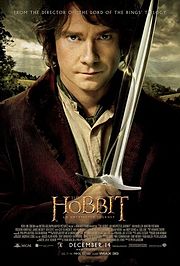
The Hobbit: An Unexpected Journey (2012)

Director: Peter Jackson
Genre: Adventure, Fantasy
Rating: A-

I wasn't sure whether I was going to like this movie or not going into it - I've never been a huge Lord of the Rings fan, but when I read The Hobbit (something like 15 years ago) I really did enjoy it. I was sure it was going to be good, but I didn't expect to be amazed.  To be honest, that's exactly what happened.  It was good, there were even parts that were great, and it brought my attention to some actors who I doubt I would have ever really noticed without it (notably Dean O'Gorman, who I haven't seen in anything since he was Iolaus in Young Hercules alongside Ryan Gosling), but it didn't really blow me away.  I know, I know, I'm a bad fan of fantasy if I don't love the works of Tolkien, but I don't.

The Hobbit: An Unexpected Journey is the first instalment of a prequel trilogy to the Lord of the Rings trilogy - and if you sci-fi fantasy fans out there don't instinctively cringe when you hear the words "prequel trilogy" I question you.  Set sixty years prior to the events of The Lord of the Rings: The Fellowship of the Ring, The Hobbit tells the story of how the hobbit Bilbo Baggins (Freeman) joined the company of dwarves lead by Thorin Oakenshield (Armitage) on a journey across Middle-earth to reclaim their lost homeland, the Lonely Mountain, from Smaug the dragon.  The dwarves and Bilbo are joined the the wizard Gandalf the Grey (McKellen).  The group comes across Trolls and Orcs on Wargs - the latter who which are hunting specifically for Thorin - Elves, Goblins, and the wizard Radagast the Brown (Sylvester McCoy), who tells of a necromancer at Dol Gulder (played by Benedict Cumberbatch).  Most important of all, however, Bilbo encounters the slimey creature known as Gollum, who carries with him a mysterious ring.

Okay, so I will say this film is fun - in a lot of ways even more so than the Lord of the Rings films were.  There is no dark gloom hanging over our dwarves and hobbit yet, as they embark on an adventure.  They're not trying to save the world, they're trying to kill a dragon and take back a home.  This instantly makes The Hobbit a lot lighter than its predecessor-sequel, a fact that is added to by the way that it's shot - the colours are a lot brighter and cleaner than Lord of the Rings ever was.  There's also a lot more humour here, notably among the dwarves (and their interactions with Bilbo) and Gollum - although Gollum's despair does succeed in bringing a tear to the eye.

I think my favourite part of this movie is the fact that the goal is a lot clearer than in The Hobbit.  I realize that things are about to get a bit murky - what with the ring, and the necromancer, and all - but The Hobbit sets out to be a film about dwarves and a hobbit going to a mountain to fight a dragon, and in the end that's what the series is - or should be - about.  There's other stuff going on too - the ring, the necromancer, the orcs - but the end goal is clear.  You don't feel like anyone is about to stab someone in the back or anything - however unlikely this company is, and however much they might not always like each other, you never feel that they're going to kill each other.  Or at least, not yet.

The thing that I disliked the most about this film, however, is the way it tries to tie into the original series and, more importantly, the way that it utilizes the source material - and strays from the source material.  I might not be the biggest Tolkien fan, but I really don't like seeing people try to add to a work of literature when they make the conversion.  Sure, I understand some things have to get left behind, or merged with other things, but you don't need to add new parts to the story.  The way they did that really bothered me - but then, I suppose if Peter Jackson didn't add to the material, he couldn't as easily make The Hobbit into a trilogy.  I will say that I did really enjoy the way the film used Ian Holm to set up the idea of Bilbo writing a memoir of sorts about his journey, but I don't think that Elijah Wood as Frodo was necessary at all.

Les Misérables (2012)

Director: Tom Hooper
Genre: Musical, Drama, Romance
Rating: A-

Les Misérables follows the life of Jean Valjean (Jackman), a French convict who in 1815 has been released from prison on a parole - he has served a nineteen-year sentence for stealing a loaf of bread and is deemed a violent man.  Initially, Valjean does reoffend, but after an encounter with the Bishop of Digne (Colm Wilkinson) he takes it upon himself to start again and, breaking his parole he abandons his identity as Jean Valjean and starts new.  Prison guard, Javert (Crowe) finds out about Valjean's broken parole and vows to hunt the man down.  Eight years later, Valjean is a factory owner and the mayor of Montreuil-sur-Mer.  Working for him is the lovely Fantine (Hathaway), who is discovered to be sending money to her illegitimate daughter Cosette (initially Isabelle Allen, but later Seyfried), who lives with the Thénardiers (Baron Cohen and Bonham Carter).  Despite being hunted by Javert, Valjean takes it on himself to help Fatine and her daughter.

There are a few problems with Les Mis.  One is that it both moves too quickly and too slowly - it's a long movie and at times feels it, but things still move forward really fast.  There was nothing that I felt could have been taken out, everything had a point, while there were things that I could have seen being added, although still, long movie.  The second problem is that the singing isn't necessarily the best.  The film is essentially sung-through with almost no straight dialogue, but the actors are not exactly known for their singing.  Adding to this is the fact that the singing is done live, instead of in a studio, which leads to mixed results.  In the case of some of the actors - Helena Bonham Carter, Sacha Baron Cohen, etc - this has a neutral result, neither adding nor taking away from the actual play.  In the case of Russell Crowe, it kind of takes away from things as his voice isn't really suited for this kind of performance.  I know that Russell Crowe is a singer as well as an actor, but I don't think he's a stage performer and that's what's kind of required in this role.  It's sad because he totally fit the role of Javert, but his voice didn't.  I had similar issue with Hugh Jackman - no problem with his actual singing voice and thought that his physical acting was superb, but I don't think his singing really sold the emotion that he was trying to convey.

This critique, however, is in strong contrast to the absolutely amazing performances of Anne Hathaway and Samantha Barks.  Barks plays Éponine and she just absolutely amazed me in her performance - although she does have an advantage to some of the other actors in that while she is somewhat unknown in film, she's a stage actress and has played Éponine before.  Her performance of "On My Own" absolutely amazed me.  Anne Hathaway doesn't have such a background (although her mother did play the same role in the first U.S. Tour of Les Mis), and yet blew me away with her performance.  I wasn't too sure about it at first, but the more time she spent on screen the more I loved her, and the weakness and raw emotion that she displayed wowed me.  While I loved Barks' "On My Own" Hathaway's "I Dreamed a Dream" brought tears to my eyes.  It was superb.

The other thing that I really loved about this film was the sheer transformation of some of the actors.  In the opening shot, I didn't recognize Hugh Jackman at all.  While he does clean up, the man that he in those first scenes haunts the man that he is later on.  Helena Bonham Carter and Sacha Baron Cohen were constantly changing to adapt to their surroundings, but in a comedic way (that was really needed in this film) that ensured you always knew who they were.  They brought their own personalities to the roles in a way that just perfectly fit.  Once again, however, top props has to go to Anne Hathaway, who just seemed to completely transform here.  She starts the film as this beautiful, rather out-of-place woman, and descends into this mess of a woman with this horrible hair (it looks better on Hathaway in real life, but in the film it's bad), blotchy face, and bloody teeth.  It's probably Hathaway's biggest transformation to date and just.. yeah.  I honestly believe that she deserves to win every award she is nominated for because of this role.

Monday, 24 December 2012

Drums of Autumn

Author: Diana Gabaldon
Genre: Historical, Romance, Sci-Fi
Rating: A-

The fourth instalment in the Outlander series, Drums of Autumn takes our heroes Claire and Jamie Fraser to the American colonies just before the American Revolution.  While Claire knows what is going to happen she's not certain an all the details and knows that she and her family must walk a thin line so as to survive the Revolution with their lives intact.  Newcomers to the land, the Frasers must establish themselves and Jamie dreams of gathering up the men that he was in prison with.  Meanwhile, in the mid-20th century their daughter Brianna is coming to terms with now essentially being an orphan, having lost her mother and the father that she has only just learned of.  In order to come to terms with this, Brianna and the historian Roger Wakefield seek out information about Claire and Jamie, with the hope of discovering what happens to them.

The question that I always have here is just why Claire and Jamie decide to settle in America, at least knowing what they know.  Regardless of their allegiance to the British crown (which does exist for Claire if not her husband), being somewhere largely unaffected by the war just seems kind of safer and in the long run smarter.  Once they commit to making life work in America I get why they chose to stay, but I always wonder why they decided to make that commitment in the first place.  I don't even buy that Jamie wouldn't have had friends or family in Canada to help him establish himself - Jamie seems to have friends or family just about everywhere he goes.

That being said, I did like the general story of Drums.  Things get a lot more complicated in this part of the series than they ever seemed to be in the first two (or three) books, but it's an enjoyable complicated.  I am never too sure about Brianna and Roger as characters, and even less so as time travellers.  Claire seems to have fit in both the 18th and the 20th century, while Brianna and Roger seem to only fit in the 20th, despite their travelling to the 18th (and Jamie, who is stationary in time, doesn't seem as though he would fit in the 20th, although if given the opportunity and need I have no doubt that he would make it work if it meant being with Claire).  I do like the overarching villain of Stephen Bonnett, though, and find the threat that he adds to things to be really interesting.  I grew to kind of hate Geillis in the earlier books, and not in a good way, so I was glad to see that they were really done with her and had moved on to a new threat - or to at least be given that feeling.

Monday, 10 December 2012

Drive

Author: James Sallis
Genre: Neo Noir
Rating: A-

"Much later, as he sat with his back against an inside wall of a Motel 6 just north of Phoenix, watching the pool of blood lap toward him, Driver would wonder whether he had made a terrible mistake."

It's kind of a rule of book-to-movie adaptations that the book is always better than the movie.  Like every rule, there are always the exceptions to it, and James Sallis' Drive, which inspired the movie of the same name, is one of those exceptions.  That's not to say that this book isn't good, great even, just that I think the movie was better.

Drive is about a man, Driver, who works as a stunt driver during the day and a get-away car driver during the night.  Life is good, albeit a bit unstable, until he takes a job that goes horribly wrong.  During it Driver is double crossed, and following it he decides to go after those who did the double crossing and are out to kill him.  The story is told in an anachronistic fashion, going back and forth between Driver's actions following the double crossing and his life leading up to it, and follows not only Driver but to a lesser extent the lives of those around him.

In a lot of ways, the plot of Drive the book is a lot better than the plot of Drive the movie.  It isn't a love story, it isn't an action story, it's just a nitty gritty, dark book.  It isn't trying to appeal to this vast audience, which is in my opinion what makes it a real gem.  It's written not for the money that it can make or the attention that it can draw, but for the pure pleasure of writing. We get the background of the characters - Driver, Nico, Benie Rose.  We get to understand why things happen the way they happen.

What doesn't work as well is the anachronistic ordering of the book, and the way that it appears to be a bit unsure of the tense that it wants to be written in.  There were a few points when I wasn't sure if the book was being written in present or past tense or both, in a way that was really rather aggravating.  The way that it switched around with the narration and point of view was also aggravating - a lot of the time it wasn't bad, but there were times when it took me a bit to figure out just whose part of the story was being told.  I don't mind having to think when I'm reading - I enjoy it really - but I do dislike being deliberately confused by the author.  It's one thing when it's a misleading plot, it's another thing when it's more the case of sloppy writing and a lack of personal pronouns.  When your characters are primarily male then "he" doesn't cut it as an identifier.

I did really like the way this book ended, however, and the plot differences between it and and the movie.  The movie really tries to be a love story and sets up a lot of Driver's actions as the result of this.  In the book, however, the relationship between him and the girl is far from being the focus, which I liked.  Love stories are great, but not everything is a love story, which Sallis seems to get.

Saturday, 8 December 2012

Sons of Anarchy (Season 5)

Courtesy of Wikipedia
Genre: Crime, Drama, Action, Comedy
Rating: A-

Holy shit.  That's all I can say after having watched this season of Sons of Anarchy. Holy shit.  Season five shows us what happens to the MC following Jax's rise to power.  Jax's sovereignty is shaky from the start; Tig (Coates)'s actions in season four have pitted SAMCRO against the crew of Damon Pope (Harold Perrineau), a man who has a lot more power and in many ways is a lot scarier than Jax.   A series of home invasions have begun to rock Charming, with the police looking to blame SAMCRO at least in part for them.  Jax must also find a way to get rid of Clay (Perlman) once and for all, while Clay is trying to figure out how to regain his power.  Gemma (Sagal), meanwhile, is on a path to hitting rock bottom as she begins drinking and smoking heavier than before, and ends up in the bed of a pimp, Nero (Jimmy Smits), who uses his relationship with Gemma to forge a relationship with Jax and the club.  Tara (Siff) closes herself off to Gemma once again, and is still looking to get her and her family away from the club, while also using her doctoring services in an attempt to get closer to Otto (Sutter).  Oh, and Opie (Hurst) is beginning to question the club even more, and his future within it.

Every episode this season had me starring at the screen going "what the fuck".  I was never really sure just what was about to happen, and every twist that came shocked me.  I laughed, I cried, I got angry, I cried some more.  Even though it's only just ended, I'm already eager for the next season to start up so that I can find out what happens next.  I think I am now more convinced than ever that by series end everyone will be dead - I also think that by the end of it all, Otto will have no more body parts, at least on his face.

This season was a bit jumpy at points, and at times the direction was a bit confusing.  Things seemed to happen not necessarily because they made sense but because they had to happen and it's TV.  I also spent a lot of time watching what was happening with Jax and really questioning the decisions that he was making.  This season is about the descent of Jax and his transition into the kind of man that Clay is.  There's also a lot of fighting between Gemma and Tara, and I can't help but feel that the show is setting things up for one of their departures from things as well, if not both of them.  Once again, everyone's going to die, that's my prediction.

If you've seen this series, or at least the first few episodes, I really recommend watching this video released by EW - clicking it has some very strongly implied spoilers, though, so don't do so unless you already know what happens or don't mind figuring it out.

Wednesday, 24 October 2012

Seven Psycopaths (2012)

Director: Martin McDonagh
Genre: Comedy, Crime, Drama
Rating: A-

This movie is nothing like what you expect it to be.  That's the warning; the trailers and even the poster for this movie make it seem like it's about seven people, each one of them a psychopath, as they get up to shenanigans following a dognapping.  It is about that... but it's also about a lot more, and people who are implied to be a psychopath in the promotion for this (and even are implied to have a major role) aren't.  Not really, or at least not in the manner that you expect.

Marty (Farrell) is a screenwriter, currently working on a film titled Seven Psychopaths.  He has a few problems, however; one he's an alcoholic, two he's suffering from a bit of a writer's block, and three his screwball best friend, Billy (Rockwell) keeps on offering to help.  In addition to wanting to help Marty out, Billy is also a professional dognapper.  He and his partner, Hans (Walken), kidnap dogs then after a few days return them to their owners for a reward.  This is all going great, until they kidnap Bonny, the dog of a gangster, Charlie (Harrelson).  Charlie is willing to go to great lengths to get his dog back, killing and destroying anything that is related to this dognapping.  Through this all, Marty begins to find his inspiration for his film - although whether he or any of his friends will survive long enough to finish the script is debatable.

I did have a problem with how this film was advertised.  The trailer presents each of the stars as one of the psychopaths, and while this isn't entirely false, some of them are psychopaths, the reasons for which aren't what happens in the movie.  Furthermore, three of the stars aren't really stars and have very minor roles in the film - I loved Tom Waits' role, but it's not really an important one overall to the film, and neither of the women really have anything to do in this movie.  It's just very misleading to have them in presented as being so important and then barely have them present.

That having been said, I loved this film.  I love the way in which they tie in Marty's script and the overall plot of the film, and the struggle between the belief systems of the core characters - with Marty and Hans being pacifists, Billy being all gungho for the action sequences, and Charlie being hell bent on revenge and getting his dog back.  There are as many sequences of long talking as the characters articulate and argue about their beliefs as there are fight sequences, if not actually more.  A lot of this is a talk about what's going on with Marty's script, but everything that they say about the script relates to what's actually happening in the film's plot. It all really ties in nicely, which I loved.  The one thing that did worry me for a bit was that things wouldn't be resolved, or that the ending would be anticlimatical.  Having seen Martin McDonagh's films before, I should have known better than to worry.

The acting was also really great.  I thought the actors were really well cast.  Sam Rockwell plays the perfect weird, creepy guy, as does Christopher Walken, and to have them together is just awesome.  I thought Colin Farrell did a really good job of providing the straight man to them, particularly Rockwell, while also embracing his character's issues - somehow, Colin Farrell does drunk Irishman with a lot of life problems in general.  It was really good and made me want to watch it again and, even better, made me want to watch more of McDonagh's films.  The first thing I wanted to do when I got home was put on In Brughes.

Wednesday, 17 October 2012

Argo (2012)

Courtesy of Wikipedia
Director: Ben Affleck
Genre: Biography, Drama, Thriller
Rating: A-

"The whole country is watching you, they just don't know it."

I'm just going to start this by stating that I'm not an American.  I do not now live in the States, nor have I ever lived there.  As such I really don't buy into the whole "rah, rah, yay America!" act that a lot of movies do.  I am, however, a historian, and as such I love historical films because in my opinion history is always an interesting story and has so much drama to it... in a story like the one of the Canadian Capers, you don't need to add fictional elements - the story is already there.

Argo is the story of the Canadian Capers, although to my disappointment it does do a lot of fiction weaving within the story.  During the 1979 Iranian Revolution the U.S. embassy in Tehran is taken over by Islamic militants, with the bulk of the American employees being taken as hostages.  Six of them, however, managed to escape and take cover in the home of the Canadian ambassador Ken Taylor (played by actual Canadian Victor Garber).  Enter the CIA: specialist Tony Mendez (Affleck) is brought to help come up with a way to get the Americans out of Iran, and he comes up with the idea of posing as a film crew in Iran scouting locations for a science fiction movie.  With the help of Hollywood make-up artist John Chambers (Goodman) and film producer Lester Siegel (Arkin) Tony creates an elaborate plot, goes in to Iran, and sets out to save the Americans.

In regards to the necessary components of a good film, Argo really does have it all.  There's suspense and action, and it really makes your heart race.  Even going into the movie with a basic knowledge of what happened and the end results, I was sitting on the edge of my seats anxious to see whether the Capers would make it out, and if so just how. There's a lot of humour to it too, some of it appropriate and some of it less so, but all of it good.  One of my favourite lines was when one of the Capers said that they were a Canadian, then tossed in the obligatory "eh."  Somehow I think the laugh in the Canadian theatre that I was in was somewhat different from the one that was intended to get from that.  There were a lot of laughs like that, one liners that you really weren't expecting but had everyone in the theatre laughing.  Some were lines that you saw in the trailer, but in the actual film it was somehow funnier.

That being said... as both a historian and a Canadian, I do have problems with this movie.  It was really enjoyable, I'll give you that, and I can even understand why it's getting Oscar buzz.  However, there are huge liberties taken with the history of this film (and the portrayal of the characters within it, Affleck's getting a fair bit of flack for choosing to portray the Latino Mendez).  The story itself is changed in order to create some sort of suspense and an action sequence, particularly in the latter third of the film.  I really can't see how this is necessary, and as someone who's read a bit about this incident and who is interested in history, it bothers me that filmmakers (in general, not just Affleck) feel the need to do this.  The story is already there, they don't need to change it in order to make it better.  The reason why the Canadian Caper is such a great story is not because Affleck was able to introduce a good chase scene, it's a great story because it's about people coming together to do what many would think to be impossible.  When you couple it with the postscript that initially accompanied the film (which I haven't read itself, but reports of it say that it essentially indicated that the CIA let Taylor take credit for the incident, implying that he doesn't really deserve the accolades he (and the Canadian government) received because this incident), it becomes a bit of an insult and a piece of pro-American propaganda.  That in itself was a disappointment.  While the postscript was changed, the film itself still keeps much of that tone.

Saturday, 13 October 2012

Franklin & Bash (Season 2)

Courtesy of Wikipedia
Creator: Kevin Falls and Bill Chais
Genre: Comedy, Legal Drama
Rating: B


I wasn’t as much of a fan of this season of Franklin and Bash as I was the first.  While it’s still a great buddy lawyer type show and still maintains the hijinks that I enjoyed in the first season – and continues on with the awesome guest stars, stepping it up in a great way by having Jane Seymour (who I love) play Peter (Gosselaar)’s mother – it’s starting to lose a bit of the charm, at least for me.  There’s a line between childish immaturity and fun, and I’m not exactly sure which side of it F and B are on.

This season shows us… well, Franklin (Meyer) remains short with daddy issues, Bash remains tall with ex-girlfriend issues, Pindar (Nanjiani) is working on not being a shut in with a gazillion phobias, Infeld (McDowell) is an excentric old guy with too much money, Karp (Diamond) is a douche, and Hanna (Beauvais)… actually, I’m really not sure what’s going on with Hanna.  I think my problem with the show could really be surmised by her in general: sometimes she seems to be on the side of Franklin and Bash, other times she’s with Karp in the quest to have them removed.  To be honest, I really don’t get the quest in itself anymore.  The two of them have had plenty of opportunities to prove themselves and despite their questionable antics have done so rather successfully; it really just seems like the show writers have given Karp this bone and let him chew on it incessantly.  It’s boring – if you’re going to make a character semi-villainous, give him a reason for being so.  As for Hanna… well, in general, I really have no clue what her motivation is.  During the first season she seemed to go back and forth on the issue for no apparent reason, during this second season she’s all anti-Franklin and Bash but her motivation is never revealed.

This stagnation is the shows problem in general.  While I understand it’s trying to be more episodic than serial the complete lack of any overarching plot is a disability for the show, as is the complete inconsistency in it.  The feelings of the characters seem to only really serve the plot-of-the-week, which gets annoying very quickly.  Franklin’s daddy issues only really come out when his father’s appearing in an episode, Bash’s feelings for Janie (Claire Coffee) only come out when she’s appearing – the rest of the time he’s really a bit of a pig when it comes to women, as is his counterpart.  The show in general feels almost like it should be a sitcom, but for some reason it isn’t.  From this side of season two, I’m not entirely sure if I care enough about the show anymore to watch season three… I guess we’ll have to wait and see how I feel about it all next summer.

Monday, 3 September 2012

Let's Pretend This Never Happened (A Mostly True Memoir)

Courtesy of Wikipedia
Author: Jenny Lawson
Genre: Autobiography, Comedy
Rating: A-

I ended up reading Let’s Pretend This Never Happened at least partially by accident. After a bad day I’d gone into my local bookstore and picked up a copy of Jenny Lawson’s memoirs and began to flip through the first chapter, thinking that reading would help quell my temper before I went on with the errands that I had to run – reading tends to have that effect on me. Before I knew it I was sitting in one of the “use for 30 minutes only” chairs mid-way through the seventh chapter and completely hooked on the book. Because I was in public I was trying to do my best to not laugh out loud as I read the stories within these memoirs, resulting in a choked convulsion that amused one of the store clerks greatly – fortunately for me, she’d already read Let’s Pretend and understood just why I was laughing.

Let’s Pretend This Never Happened is blogger Jenny Lawson’s first foray into book-writing, and a remarkably revealing one at that. While she does provide the disclaimer in the title that the events described in the book are “mostly true”, she also provides countless pictures throughout the book to support many of her stories and has a way of telling you when she’s not exactly been truthful, resulting in the feeling that ninety per cent of the book is in fact truth. While the bulk of the stories are either hilarious or disturbing (or disturbingly hilarious), others are really moving and heart wrenching; it’s easy to laugh as Lawson describes the time that she artificially inseminated a cow for school, it’s much harder to do so as she describes her many failed pregnancies and the neurosis that she developed as a result.

Lawson balances both cow vaginas and her own with remarkable skill, and uses them and the other stories that she tells to paint a picture of a very neurotic, very real woman who in many ways isn’t all that different from you or I. When reading the individual stories that make up this book you might not be able to say “I’ve done that,” but I’m sure you’ll be able to identify with a lot of the feelings behind it. In many ways this book is almost an ironic depiction of Lawson; she describes herself as this extremely neurotic woman who over thinks even the simplest of social interactions and is constantly having to check herself in order to ensure that she’s fitting into the standards of normalcy projected by mainstream society – and when she fails to hilarity, disaster, and awkwardness ensues – but in her memoirs she reveals the woman that she really is. While I’ve never really read any of her blogs, it makes me wonder if she is as open there as she is in Let’s Pretend.

While I could go on praising Let’s Pretend and go into some of my favourite parts – in addition to the chapter about the cow’s vagina there’s also a lengthy part about how, while working in Human Resources, Lawson repeatedly had to track down male staff and ask them ‘is this your penis’ after they’d sent pictures of their genitalia out over the office email – I should probably point out a few of the more negative points. While I loved the beginning and loved (although, maybe to a lesser extent) the ending, I found the middle to be a bit slow. Lawson spent a lot of time on her anxiety, but the stories there seemed to be repetitive, especially as she detailed the many times that she embarrassed her husband while at one of his work parties. Where Let’s Pretend really shined was in the stories about her family and her friends. The story about when Lawson went with a group of women on a wine tasting was, in my opinion, a perfect example of Lawson’s neurosis but still had the charm of her interacting with people that she cares about and loves – the same cannot be said for the stories of her rambling about serial killers to her husband’s colleagues. While both might be true, one makes her out to be this very real person while the other makes her look just nuts.

Monday, 27 August 2012

The Mystery Knight

Courtesy of Diana Gabaldon's website
Author: George R.R. Martin
Genre: Novella, Fantasy
Rating: A-

The third novella in George R.R. Martin's Tales of Dunk and Egg "The Mystery Knight" reunites us with Ser Dunk and Prince Egg, and of course Egg's boot.  In this story, Dunk and Egg are headed north when they are sidetracked by a wedding feast, and tourney, in honour of the marriage of Lord Ambrose Butterwell and a daughter of Lord Frey.  Things are not all what they seem at the tourney, however, and there is a lot of talk of the Blackfyre Rebellion.

I think the thing that I like most about "The Mystery Knight" was that it divulged more into the history of Westeros while also making it part of the present.  There's the whole cliché that history repeats, and here Martin proves just how true that is.  I like the way that Dunk's life has drastically changed since he met Egg, and I also really like how, despite being a Martin creation, he's a very likeable character.  He isn't exactly the brightest and he certainly isn't the best jouster - both facts which he is well aware of.  He's almost like a Stark in that you really can't help but root for him, no matter how many times his actions lead him into trouble.  In contrast, there's Egg who while being likeable is far more arrogant than his counterpart.  You learn a lot more about Westeros from the mouth of Egg than you do from the thoughts of Dunk, but half the time his mouth opens you can't help but cringe and hope that Dunk clouts him.  Especially when he's mentioning his boot, which the contents of have caused as much trouble as relief.

My favourite part of this story was the fact that Dunk finally got to see the consequences for some of his previous actions, notably those in "The Hedge Knight."  The consequences of that first story are huge, as is Dunk, and it's nice to see that people haven't forgotten him.  Likewise, it's nice to see consequences to Egg's arrogance.  I'm not exactly sure that Egg's learned from his actions, but a lot of "The Mystery Knight" was showing the reader just what would happen if Egg's identity ever became common knowledge. Even when he does pull out his boot things don't exactly go the way that he expects, although once again I'm not sure if Egg realizes as much yet.  Once again, I'm looking forward to the next installation in this series.

Lord John and the Plague of Zombies

Courtesy of Diana Gabaldon's website
Author:Diana Gabaldon
Genre: Historical,Mystery, Novella
Rating: A-

 “Lord John and the Plague of Zombies” takes Lord John Grey to Jamaica, where he must deal with slaves, rebellions, corrupt Englishmen, snakes, and zombies, although not in that order.  At the start of the novel Grey has just arrived at Jamaica, summoned by the Governor to suppress a slave rebellion.  The rebellion is not entirely what it seems, with those rebelling against the English rule being not slaves but rather the descendants of the descendants of runaway slaves, no one knowing just who technically owns them.  What’s more is that the Governor’s home is overrun by snakes and a slave warns Grey to stay away from the Governor or else run the risk of being assaulted by a flesh eating zombie.  As per usual, it all goes to hell from there.

This story would have fit in well within the Lord John and the Hand of Devils anthology, had it been published later.  The way in which Gabaldon brings up the idea of the supernatural and then dismisses it is handled very nicely, although she does less dismissing than done in the previous novellas.  There are still a few questions that one could ask, although none that are of any great significance.  I really liked the way in which she continued to bring in old foes for Grey to encounter – even going so far as to re-introduce a foe from the early Outlander books.  I really like the way that each of these stories is for the most part a standalone story, with the plot being largely resolved by the story’s conclusion, but at the same time are all interconnected.  “Plague of Zombies” is like this, with elements of the story coming from The Scottish Prisoner and “The Custom of the Army.”  The one thing that I did dislike a bit was that there wasn’t really indication as to just when this story takes place; I know that it is at some point after the events of The Scottish Prisoner and before some of the events of the Outlander novel Voyager, but not exactly when. As such, it’s a bit discombobulating, trying to figure out just exactly what the time frame is.  Hopefully when Gabaldon publishes “Plague of Zombies” in her own anthology she remedies this by including a date at the start of the work. Otherwise, I thoroughly enjoyed it.

Saturday, 25 August 2012

Revenge (Season 1)

Courtesy of Wikipedia
Creator: Mike Kelly
Genre: Thriller, Mystery, Serial Drama
Rating: A-

I’m still not exactly sure how I feel about Revenge’s premier season.  I like the basic story, although it’s one that I’ve seen before, but the overall tone of the show kind of got to me after awhile.  After awhile I couldn’t help but feel like I was watching a daytime soap opera instead of a primetime TV series.  As the series wasn’t on the CW this feeling was a bit annoying.

Revenge follows Emily Thorne (VanCamp) as she moves to the Hamptons in order to pursue a plot of revenge against the Graysons - Conrad (Czerny), Victoria (Stowe), Daniel (Bowman), AND Charlotte (Allen) - an elite family that spends every summer at the Hamptons.  Seventeen years prior Emily’s father, David Clark (James Tupper), was framed for a terrorist attack by the Graysons and their colleagues, resulting in David Clark spending the rest of his life in prison and his daughter, then known as Amanda Clark, being shipped off to foster homes, an institution, and later a juvenile prison.  Now with a new identity and a lot of money Emily has a carefully detailed plot against those responsible for her father’s downfall.

I think the series can be kind of divided into two halves; the former where Emily’s beginning to carry out her plot and is a somewhat likeable character, even if she’s also a rather devious bitch, and the latter where Emily’s become rather consumed by her plot and is just an outright bitch.  There are a lot of big reveals – affairs, illegitimate children, multiple identities, murder, and so on – but the more that they happen the more disinterested with the show I became.  At some point the whole thing just seemed to be about everyone in it trying to screw over everyone else in it.  I don’t think there’s a single character in this show who actually has a descent nature – even Jack, who’s the nice guy uncorrupted by money, can be a bit of a dick at times, and when he’s not it’s hard to think of him as anything but a shmuck.  Making things worse is the fact that the more reveals happen the more the show feels like it’s little more than a soap opera – I’m seriously waiting for a character to be randomly recast or a baby to be born and then rapidly aged, or someone’s long lost evil twin to appear.  The show started with an interesting premise, but it just becomes a bit much after awhile.

Saturday, 4 August 2012

Downton Abbey (Season 2)

Courtesy of Wikipedia
Creator: Julian Fellowes
Genre: Period Drama
Rating: A-

While not entirely as awesome as the first season of Downton Abbey, the second season still manages to be one of the best shows on TV.  The big problem with this season is simply that it moves too fast – it’s rather clear that the show runners were eager to get out of the war as quickly as possible – but despite that I still think it managed to treat at least most of its plots fairly well, and still succeeded in keeping you on your toes as to what is going to happen with your favourite characters.

The season starts in 1916, with the Battle of the Somme, and ends in 1918 with the 1918 Spanish flu pandemic. With few exceptions all the original cast are back, and the viewers get to see what happens to Downton during the Great War. The Earl (Bonneville) is struggling with finding a place in the new world that is emerging around him; he’s very firmly attached to the identity that he had before the war and is unable to find a useful role during the war. His wife and daughters are each struggling to do similar, in their own way, as the Countess (McGovern) deals with the idea of turning Downton into a convalescent for the local hospital, Lady Edith (Carmichael) learns to drive and begins to fill in for the missing men in the town and cares for wounded officers, Lady Sybil (Brown Findlay) becomes, more political, and develops feelings for chauffer Tom Branson (Allen Leech), and Lady Mary (Dockery) … well, Mary gets engaged to Sir Richard Carlisle (Ian Glen), while still pining for Matthew (Stevens), who’s gone to war and gotten engaged. Isobel (Wilton) is pretty much set about making life difficult for the Countess, causing her and the Dowager Countess (Smith) to team up and work against her. Amongst the staff, Thomas (James-Collier) has gone to war as a doctor; William (Howes) wants to go to war but has promised his father he won’t; Anna (Froggatt) and Bates (Coyle) are desperate to get married, despite the many obstacles to do so presented by the current Mrs. Bates (Maria Doyle Kennedy); Carson (Carter) and Mrs. Hughes (Logan) are trying to keep the household together; and new maid Ethel (Nuttall) is a bit of a bitch and kind of a whore.

The big problem with this season is that it takes on too much and moves too fast.  While time doesn't pass too much faster here than it did in season one (with each covering about two years) it feels like it is.  There are a lot more plots going on here and it really seems like some things are just randomly dropped.  So much of the first season was based on the (very simple) plot of Mary needing to get married upstairs and the addition of Mr. Bates downstairs.  This time round there's a lot more going on and, to the disadvantage of the overall tone of the show, a lot of plots seemed to be rather quickly abandoned.  Just a few of the plots are a bit contrived too, taking you out of the delicate realism that is the show.  The further into the season things get the more soap opera-y it gets.

The acting, however, is still good, and while the show does add on a gazillion additional plots the focus really is still Mary, Matthew, and Mr. Bates. Of all the different directions that the show takes in this season, I still love how it remains about that core.  Some of the things that they do with Bates are a bit over the top, as are some of the things that they do with Matthew, but the overall story is still there.  It wasn't the best season, but it could have been a lot worse.

Tuesday, 10 July 2012

The Amazing Spider-Man (2012)

Courtesy of Wikipedia
Director: Marc Webb
Genre: Action, Adventure, Fantasy
Rating: A-

When I first heard that they were rebooting the Spider-Man franchise I rolled my eyes.  While the Sam Raimi trilogy had its fair share of problems I couldn’t help but feel like it was just a bit early to be rebooting the franchise – it wasn’t all that long ago that they were still discussing doing a Spider-Man 4 – and I didn’t really feel that it was necessary to tell another Spider-Man origin story.  At this point, everyone should know how Peter Parker became Spider-Man, it’s not that complicated of a story.  Despite my reluctance, however, I thoroughly enjoyed The Amazing Spider-Man.  There was a lot about it that sent up red flags, but it overcomes its challenges and really stands on its own as a film, suggesting that this new series might even be far better than its predecessor.

The Amazing Spider-Man follows a young Peter Parker (Garfield) during his high school years.  Following a break in at his childhood home his parents go on the run, leaving Peter to live with his Uncle Ben (Sheen) and Aunt May (Field).  Some years later as a teenager Peter finds his father’s old briefcase, which contains papers describing his work in engineering a regeneration serum that enabled humans to take on animal characteristics – a science pursued by the elder Parker’s colleague, Doctor Curt Connors (Ifans), in order to regenerate his amputated left arm.  Peter seeks out Connors in an attempt to learn more about his father by sneaking into Connors’ lab at Oscorp, where he is bitten by a genetically altered spider.  This gives Peter the spider-like abilities that we’ve come to know and love in Spider-Man, increased agility and strength, an ability to crawl up walls and on ceilings, and precognition, although not the ability to create web – rather this Spider-Man’s web is a synthetically created biocable that Peter makes.  Peter’s change causes problems between him and his aunt and uncle, culminating in Peter storming off following a fight with Uncle Ben.  While looking for Peter, Uncle Ben is shot and dies – an event that leads Peter to seek out his murderer for retribution.  As he is embarking on his new found vigilante identity, Peter also embarks upon a relationship with Gwen Stacey (Stone), the daughter of police captain George Stacey (Leary).  Disaster then strikes when Connors tests his serum on himself, turning him into a giant, mutant lizard, who wants to wreck the city to shit.

Let's start by saying that this is an amazingly acted movie.  The Amazing Spider-Man brings to the table a huge celebrity presence, one that isn't really seen in the earlier movies.  While Andrew Garfield isn't a huge name yet, pretty much everyone else in major roles in this movie is, from Gwen Stacey and her father to Uncle Ben and Aunt May.  I really liked the way that Peter Parker is portrayed in general; rather than being a borderline cheesy, heroic figure, he's as screwed up as the rest of us and doesn't necessarily make the right choices.  Rather than being all about making the better decisions, he's all about pursuing revenge for his uncle, and only becomes a hero when circumstances force him to do so.  I also really liked the portrayal of Gwen Stacey and the way that she is attracted to Peter before he becomes Spider-Man; it's nice to see that despite the fact that he's awkward he's still desirable without superpowers.  My favourite character, however, probably has to be Denis Leary's George Stacey.  There is something about Captain Stacey that is just so a Denis Leary character, and something else about him that is so completely the opposite of a Denis Leary character.  It was really fun to see him step out of his usual niche and even better to see him be the voice of reason.

Moving beyond that, there was also the great special effects.  Despite it being a superhero movie, the CGI is used somewhat subtly and therefore doesn't look fake; this is best seen in both the portrayal of Spider-Man himself and the Lizard.  In the case of the Lizard it's awesome that even in Lizard form you can still see Ifans' characteristics.  The story was also great and did a lot to set up a grander Spider-Man story, much like Batman Begins did.  The Amazing Spider-Man is based on the premise that there is going to be at least one sequel, and that you are most definitely going to see it.  While some of the story is concluded at the end of the film, the whole thing isn't and some aspects that are portrayed as having been major elements of the film in the trailer are really only hinted at.  By the end of the film you're sitting on the edge of your seat, already eager for the next one.